
A strength training planner is a plan plus a record: it tells you what to lift next, then captures what you actually lifted and how hard it felt, so the next session is set from real numbers instead of memory. The best ones cover three things: the exercises and sets you intend to do, a log of what happened, and a simple rule for what changes next. This guide shows how to build that system on paper or in a spreadsheet, how to size it to your experience, and how an app can run the loop for you.
Strength Training Planner: How to Build One That Works
A strength training planner should set your sets, reps and weights, log effort, and adjust when a session goes badly. Here is how to build and use one.
Plan Your Next Strength Session
Athlxpro sets your next weight and reps from your last session and how hard it felt, then adjusts for your morning check-in.
Explore AthlxproTL;DR
- A useful planner has three layers: the plan for the session, the log of what you did, and a review that decides the next step.
- Beginners do well with two to three full-body sessions a week; more experienced lifters can split work across more days.
- Change one or two variables at a time (weight, reps or sets) and record how hard each set felt.
- Review after every workout, every week, and every few weeks, so a bad day does not derail the plan.
- Athlxpro sets your next weight and reps from your last session and how hard it felt, and adjusts to your morning check-in.
Table of Contents
- What a strength training planner actually does
- Choose a weekly structure first
- How to plan sets, reps and effort
- What to record every session
- Make the plan bend on bad days
- Planning toward a personal record
- Paper, spreadsheet or app
- How Athlxpro works as a strength training planner
- A simple four-week planner template
- Common planner mistakes
- FAQ
- Sources
What a strength training planner actually does
Most people think of a planner as a list of exercises. That is the smallest part of the job. A planner is the place where three questions get answered every time you train: what am I doing today, what did I do last time, and what should change?
A university-hosted practical fitness guide lays out a strength planner with fields for the exercise, the variation or equipment, the number of sets, the repetition or time target, and the planned effort. It also adds a short check: are the major movement patterns represented, does the resistance suit your current ability, are demanding sessions separated by enough recovery, and is progression limited to one or two variables at a time.
That check is worth borrowing whatever tool you use. It catches the three most common planner mistakes: a week that trains pushing five times and never hinges, loads chosen by ego, and changing everything at once so you cannot tell what worked.
The three layers
Think of the planner as three layers that feed each other:
- Before the session: exercises, order, sets, rep targets, starting weight, rest.
- During the session: the weight and reps you actually did, and how hard each set felt.
- After the session: one line on what to change next time.
Skip the second layer and the third has nothing to work from. This is why people who write a beautiful plan and never log anything drift back to random weights within a month.
Choose a weekly structure first
Before you fill in a single set, decide how many days you will train and how the movements are spread across them. Time and equipment drive this decision. A BarBend guide on weekly schedules points out that the time you have sets both how many sessions you can fit in a week and how long each one runs, and that your available equipment shapes exercise selection and the set, rep and rest scheme. It lists the classic structures: push-pull-legs, body-part splits, upper-lower, and exercise-specific splits.
Here is how those options usually map to a schedule.
| Structure | Typical days per week | Best fit |
|---|---|---|
| Full body | 2 to 3 | Beginners, busy schedules, returning lifters |
| Upper-lower | 4 | Lifters who want more volume per muscle without long sessions |
| Push-pull-legs | 3 or 6 | Lifters who like shorter, focused sessions and can train often |
| Body-part split | 5 to 6 | Experienced lifters who enjoy high volume per muscle |
If you are choosing between three-day options, our guide to a 3 day weight training split compares four plans and shows how to pick. If you want a push-focused session laid out in detail, see push day exercises for order, sets and reps.
A good rule: choose the structure you can repeat for a year, not the one that looks best on paper. A plan you complete three times a week beats a plan you complete half of five times a week.
How to plan sets, reps and effort
If you are a beginner
Start simple. A NASM guide to beginner strength routines recommends two to three full-body sessions per week, starting with 1 to 3 sets of 12 to 20 reps per exercise, with short rests and slow tempos that include a longer lowering phase. Those light, higher-rep sets are there to teach you the movements before the loads get heavy.
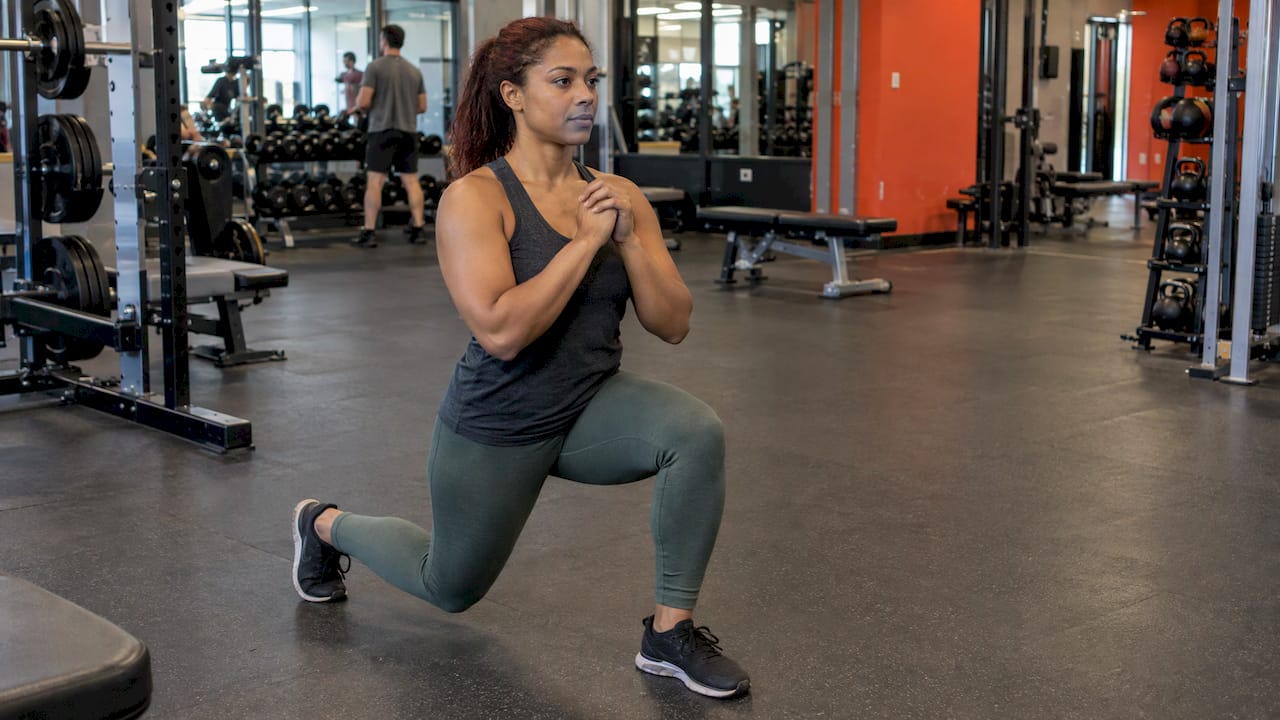
AUSactive’s resistance exercise guidelines agree on the frequency: train the whole body two to three times per week on non-consecutive days for general health. They add that trained people aiming to maximize strength may need heavier loads and lower repetitions, while those aiming to maximize lean muscle mass should do most of their work in the 8 to 12 rep range.
For a ready-made starting point, our beginner lifting plan is a three-day full-body routine you can copy into any planner.
If you are chasing numbers
Once the basics are solid, your planner needs to answer a harder question: how close to your limit are you training? That is what effort ratings are for. Rate each working set on a simple scale, such as reps in reserve (how many more clean reps you could have done) or a 1 to 10 effort score. Then your rule for the next session can be written in plain terms:
- Set felt easy, with several reps left: add weight next time.
- Set felt right at the top of your rep range: add a rep or hold the weight.
- Set felt like a grind or form slipped: hold the weight, or lower it slightly.
This is the core of progressive overload: you ask a little more of the body over time, but only when the last session shows you were ready. Effort-based training is the same idea seen from the other side, where how hard a set felt is as important as the number on the bar.
What to record every session
The more you record, the more your planner can tell you, but a log that takes ten minutes per workout will not survive. The sweet spot is a short list. The CUNY fitness tracking chapter suggests recording for each strength entry: the date, the type of workout, the exercise, the duration, sets and repetitions, the resistance or equipment setting, general effort, and any relevant notes.
Turn that into a minimum viable log:
| Field | Example | Why it matters |
|---|---|---|
| Date | Nov 6 | Shows frequency and gaps |
| Exercise | Barbell row | Lets you compare like with like |
| Weight and reps per set | 135 lb x 8, 8, 7 | The raw material of progression |
| Effort | Last set felt like 9 out of 10 | Tells you whether to add weight |
| Note | Lower back tight | Explains a bad session later |
For a deeper walkthrough of building the habit, read how to track workouts.
When to review
The same CUNY chapter recommends looking back at set intervals: after every workout, at the end of each week, every two to four weeks, and at the end of a training phase. Each review answers a different question:
- After a workout: did I hit the targets, and what do I try next time?
- End of the week: did I train the days I planned, and did every movement pattern get covered?
- Every two to four weeks: are my weights and reps trending up on the main lifts?
- End of a phase: is it time to change exercises, rep ranges or the split?
Make the plan bend on bad days
A rigid plan breaks the first time you sleep badly or a stressful week hits. A good planner has rules for those days so one rough session does not turn into a skipped month.
Write these rules into your planner before you need them:
- Hold, do not chase. If a lift felt much heavier than it should have, repeat the same weight next time instead of adding more.
- Cut a set, keep the session. On a low-energy day, dropping one set from each exercise keeps the habit and the movement pattern alive.
- Never double up. If you miss a session, resume where the plan is now. Do not cram two days into one.
- Keep hard days apart. Separate demanding sessions for the same muscles with recovery time, as the planner check above recommends.
Recovery is part of the plan, not a break from it. Our overview of sleep and muscle recovery covers what the research says about why a bad night should change how you train the next day.
If you have an injury, a medical condition, or you are returning after a long break, ask your doctor or a qualified physical therapist before you set loads and weekly volume.
Planning toward a personal record
A personal record is a result of the weeks before it, not a single heroic day. Athletes aiming for one use their planner in a particular way:
- Pick one lift and one target. A planner with six goals has none.
- Build the base first. Spend a few weeks adding weight or reps on submaximal sets, using your effort ratings to stay honest.
- Taper the fatigue, not the habit. In the week before a heavy attempt, keep the movement and lower the volume, so you arrive fresh.
- Test when the numbers say so. If your recent top sets have felt easier at the same weight, that is your signal to try a new record. If they have been grinding, wait a week.
- Log the attempt and the next step. Record the result, how it felt, and what the next block should target.
The common thread is that your own history, not a calendar date, tells you when to push.
Paper, spreadsheet or app
All three can work. The difference is how much of the loop you have to run by hand.
| Option | Strength | Where it costs you |
|---|---|---|
| Paper notebook | Simple, no screen between sets | You must flip back to find last week’s numbers and do the math yourself |
| Spreadsheet | Flexible, easy to chart | Typing between sets is slow, and formulas need maintaining |
| Training app | Logs fast and can set the next numbers for you | You need to pick one you will open every session |
The weak point of any manual system is the same: remembering last session’s weights and deciding what to do with them. That is the job to hand off first.
How Athlxpro works as a strength training planner
Athlxpro is a strength training app for iPhone and Apple Watch built around that exact loop. It sets your next weight and reps from your last session and how hard it felt, so you never have to remember last week’s numbers. It also adjusts to your morning check-in: on a bad morning it holds the weight or takes a set off. Only your training, how hard it felt and that check-in change the plan.
Programming is built on progressive overload and effort-based training, with plans that run 1 to 6 days a week. You log a set in one tap, and once the plan is on your Apple Watch you can run a full workout from your wrist. There are 577 exercise videos to check form, plus weight and volume charts, records, awards, XP and levels to show your progress.
Beyond the lifting itself, training, food, sleep, steps and heart rate appear on one screen. Alex, the AI coach, sees all of that data (the Apple Health data needs your consent) and gives advice tailored to it. You can log food by photo, which is an AI estimate, or by barcode. A community feed lets you post a session and see what others lift, and you can make PDF and CSV reports or a full JSON export on your iPhone, handy if you share your training with a coach.
There are no ads and no analytics SDKs, and health data is never used for ads. Athlxpro is a subscription, monthly or yearly, through the App Store, and it starts with a one-week trial. See the monthly and yearly plans on Athlxpro to get started.
A simple four-week planner template
If you want to start on paper today, here is a template you can copy. It assumes three full-body days a week, which fits the beginner guidance above and is easy to sustain.
Each session: pick one squat or hinge movement, one push, one pull, and one accessory or core movement. Do 2 to 3 sets of each.
Week 1: Use light weights and aim for the top of your rep range with clean form. Record weight, reps and effort. Do not chase heavy loads.
Week 2: Repeat the same exercises. Where last week’s sets felt easy, add a small amount of weight. Where they felt hard, repeat the weight and try for one more rep.
Week 3: Continue the same rule. Add a set to one or two exercises if recovery feels fine and you finish sessions feeling you could do more.
Week 4: Review. Look at the trend on your main lifts, then decide: keep the plan and continue adding, or swap one or two exercises to freshen it up. If you are tired, lower the volume for the week and restart the climb.
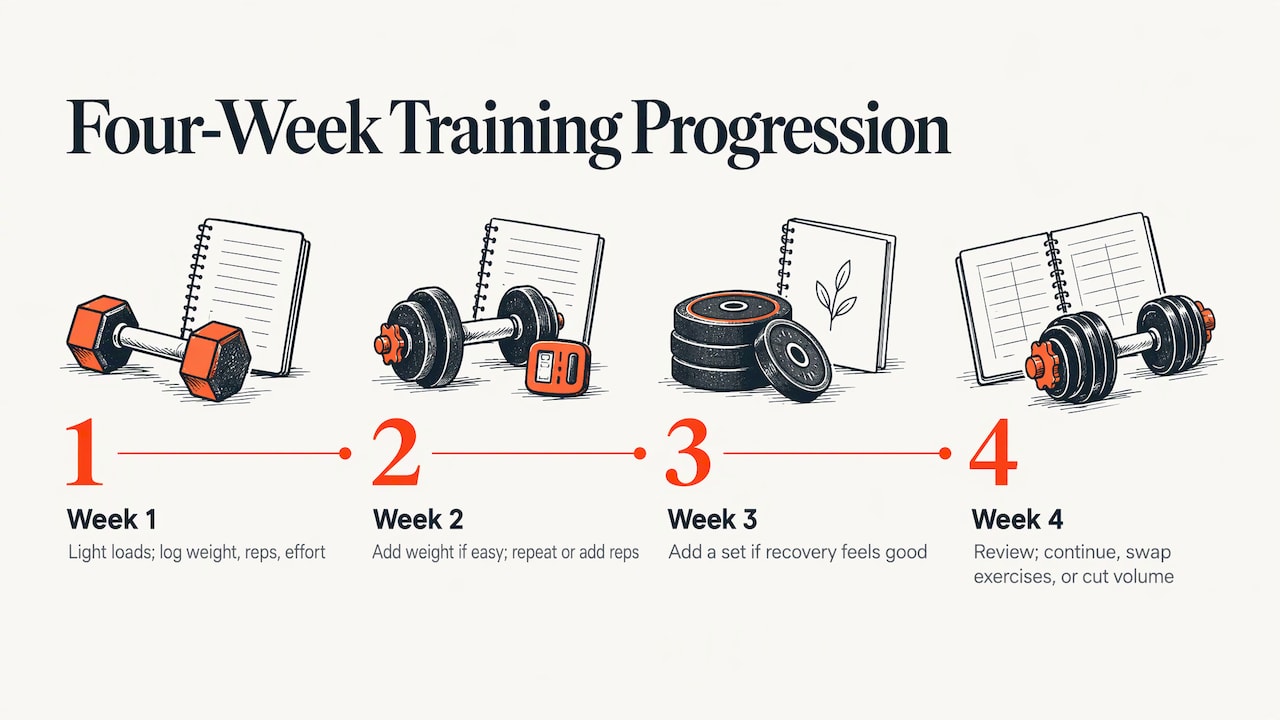
The point of the template is not the specific exercises. It is the loop: plan, log, rate effort, decide next step. Run that loop consistently and the numbers take care of themselves.
Common planner mistakes
- Changing too much at once. Swap the program, the rep range and the split in the same week and you will not know which change helped.
- Logging weight but not effort. A 185 lb squat that felt easy and one that nearly stalled are very different data points.
- Treating a missed day as failure. Pick up at the current week of the plan and carry on.
- Copying someone else’s volume. More sets are not better when you cannot recover from them. Start where you can finish every session strong.
- Never reviewing. A planner you only write in is a diary. Schedule the weekly and monthly look-backs.
FAQ
What is the difference between a workout plan and a strength training planner?
A workout plan lists what to do. A planner also records what you did and uses that to set what comes next. The record and the review are what turn a list of exercises into steady progress.
How many days a week should I plan to lift?
For beginners, two to three full-body sessions a week on non-consecutive days is a well-supported starting point, according to NASM and AUSactive guidance. As you gain experience, you can add days and split the work by upper and lower body or by push, pull and legs. Athlxpro plans run up to 6 days a week.
How do I know when to add weight?
Use effort. If your sets ended with plenty of reps in reserve and you hit your rep targets, add a small amount next session. If they felt like a grind, hold the weight. Athlxpro does this for you by setting your next weight and reps from your last session and how hard it felt.
Can a planner help if I train irregularly?
Yes. A planner built on your last session, not on calendar dates, lets you resume where you left off instead of starting over. Write simple rules for missed days: resume at the current point, and never double up sessions.
Should I track food and sleep in my planner too?
It can be useful to see them next to your training so you can spot patterns, and Athlxpro shows training, food, sleep, steps and heart rate on one screen. Your next session’s weights and reps are still set only by your training, how hard it felt and your morning check-in.
Sources
- Weekly Home Workout Planner, The Practical Guide to Home Fitness (CUNY Pressbooks)
- How to Track Home Fitness Progress, The Practical Guide to Home Fitness (CUNY Pressbooks)
- Strength Training Routines for Beginners: Start Here (NASM)
- Resistance Exercise Prescriptions for Healthy Adults (AUSactive)
- How to Make the Ultimate Weekly Workout Schedule (BarBend)